- Free Consultation 24/7: (773) 908-9811 Tap Here To Call Us


How Do Drug-Free Zones Affect Sentencing?


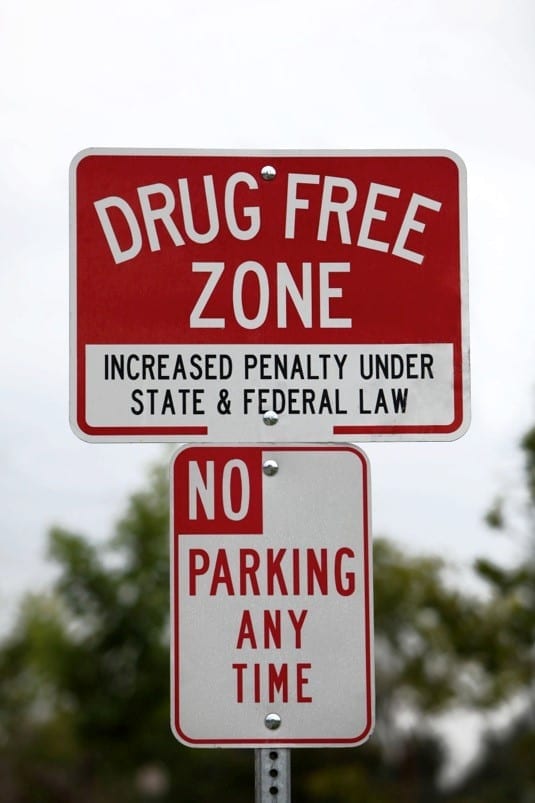
Generally, if you get caught selling a few grams of cocaine, you could face up to 15 years in prison. But if you get caught selling a few grams of cocaine in a public park, you could face up to 30 years in prison.
Wait, what?
That’s right. Literally depending on where you are standing when you allegedly commit a drug offense, your sentence could potentially be doubled. This is because many areas in Illinois cities and towns are legally considered “drug-free zones.”
While drug-free zones were first limited to public schools, Illinois is one of 31 states that has extended laws to include more areas (which means there are more places where you could face up to 30 years in prison for selling any amount of drugs).
What Is a “Drug-Free Zone?”
Even before the term “War on Drugs” became popular, Congress began to pass bills that would enact longer sentences on anyone involved in possessing, making, or selling drugs. Drug-free zones were first introduced and enforced through the “Comprehensive Drug Abuse, Prevention and Control Act of 1970.”
The early laws concerning drug-free zones merely concerned schools. Legislature wanted to keep drugs out of the hands of younger and more naïve children, so anyone caught with drugs within 1,000 feet of schools would be given harsher penalties.
In the 1980s, states started to adopt these “drug-free zone” laws as well. Now, drug-free zones are not limited to schools, and some states have extended zones to 2,000 feet of schools or other public buildings. In some states, these zones expanded to cover over 10% of the state. To put this in an even clearer perspective, over 75% of 11 U.S. cities are considered drug-free zones.
Drug Free Zones in Illinois

Every state has their own laws regarding drug-free zones. The locations, crimes, and penalties involved vary from state to state.
In Illinois, drug-free zones are any area within 1,000 feet around the following areas:
- Schools
- School buses
- Public housing complexes
- Public parks
- Churches
- Nursing homes
When you are in these zones and are caught selling, manufacturing, or possessing controlled substances with intention to deliver, you will face the charges that come with committing an offense within a drug-free zone.
In Illinois, committing certain drug-related crimes within 1,000 feet of a drug-free zones can increase your charge to a Class X felony.
Let me repeat that again: Class X felony.
A Class X felony charge is the most severe charge in the Illinois courts. The penalties for a Class X felony in Illinois include a jail sentence between 6 and 30 years, and if you are convicted of a Class X felony, you must go to prison.
Let’s look at an example of a case in which the drug-free zones would come into play.
A police informant is going undercover and pretending to buy a few grams of cocaine from someone the police are after. The informant may suggest a meeting place on a specific intersection. As it turns out, a nursing home is a block away. (1,000 feet is a larger distance than you may think!).
When the time comes for the deal to take place, the dealer is arrested and sentenced to 30 years in jail. But if the deal had taken place only another block or two farther from the nursing home, the dealer would have been out in 15 years.
These laws can be extremely frustrating, especially when the drug-free zone in question is a nursing home or one of Illinois’ many public parks.
Defenses to Drug-Free Zone Laws

Despite the efforts to enact harsh sentences and put people in jail for decades at a time, there are still ways to defend against charges that concern drug-free zones. The best way to start is to call your attorney and look through the specifics of our drug-free zone laws.
This is vital, because there are always changes being made to these laws. In 2015, legislation scrapped the idea that drug-free zone penalties apply within 1,000 feet of school property, no matter what time of day or year. The law now states that in order for drug-free zone laws to be enacted, the offense must be committed:
- When minors are present
- When minors are “reasonably expected” to be in school (during school hours and during the school year)
- During times when after-school activities are occurring
The same rule applies to school buses. Proving that the offense in question occurred on a summer night when no minors were around might save you decades in prison.
About the Author: Andrew M. Weisberg is a former felony prosecutor who now serves as a defense attorney in the greater Chicago area. He has extensive experience in handling all types of criminal cases, from sex offenses and domestic violence to retail theft-related crimes, Murder, and drug crimes.


